
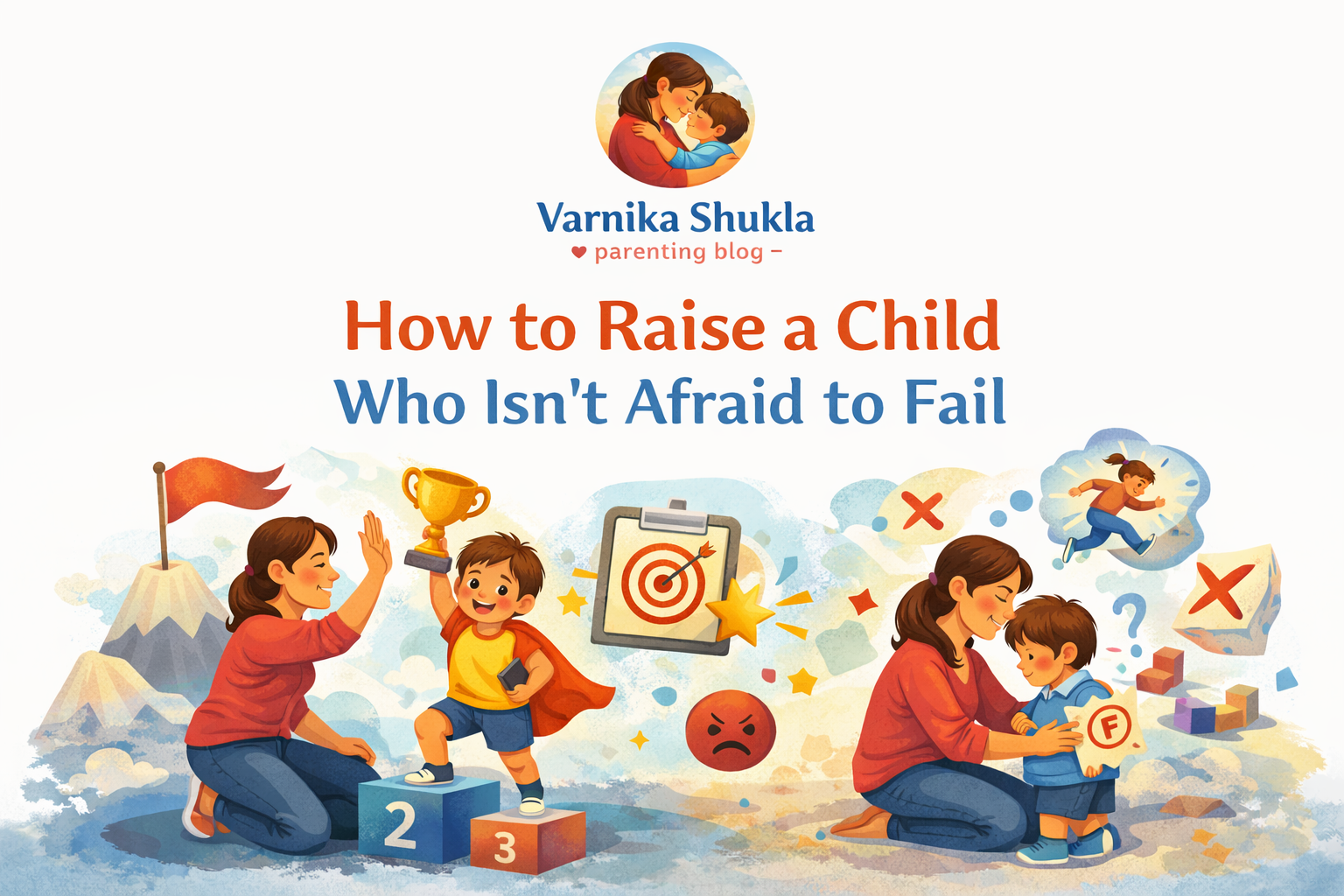
Fear of failure is one of the most limiting things a child can carry into adulthood. It shows up as perfectionism, procrastination, avoidance of challenges, and a fragile sense of self-worth. The good news is that the relationship a child has with failure is largely shaped by the environment they grow up in — and you have enormous influence over that environment.
Praise Effort, Not Outcome
Carol Dweck’s decades of research on mindset show that children who are praised for effort (“You worked really hard on that”) develop a healthier relationship with failure than children praised for ability (“You’re so smart”). When the praise is about effort, failure isn’t a verdict on who you are — it’s just information about what needs more work.
Tell Your Own Failure Stories
Parents who share their own struggles and failures — how they bombed a job interview, failed a class, or made a bad decision — normalize failure as a universal human experience rather than something shameful. These stories are gold. They tell your child that failure doesn’t end you, and that the people they admire most have failed too.
Resist the Urge to Rescue
When your child is struggling, failing, or about to make a mistake, every parenting instinct screams to intervene. But rescued kids don’t learn recovery. They learn that someone will always bail them out. Let appropriate failures happen — the low grade, the lost game, the fallen craft project — and focus your energy on how they respond, not whether it happened.
Make ‘Mistakes’ a Normal Word
How your family talks about mistakes matters. Homes where mistakes are met with disappointment, criticism, or punishment produce kids who hide errors and avoid risks. Homes where mistakes are met with curiosity (“What can we learn from this?”) produce kids who try harder things. Make “I made a mistake” a normal, uncharged phrase in your household.
Celebrate the Try, Not Just the Win
Acknowledge the courage it takes to try something new, enter a competition, audition for something, or raise your hand when you’re not sure of the answer. “I’m really proud of you for trying” — regardless of outcome — builds a child who associates bravery with reward, not just success.
Set Challenges That Are Appropriately Hard
Children need to experience what psychologists call “desirable difficulty” — challenges that are hard enough to require real effort but achievable enough that persistence pays off. Too easy and they don’t build grit; too hard and they give up. Find the sweet spot and stay in it as much as possible.