Category: Parenting

  • 10 Screen-Free Activities That Will Actually Keep Your Kids Entertained for Hours

    Let’s be honest — handing your kid a tablet is the easiest parenting win of the modern age. But between school and bedtime, most of us are secretly searching for ways to peel them away from screens without a full-blown meltdown. Good news: these screen-free activities are so fun, your kids won’t even notice the difference.

    1. Build a Cardboard City

    Save your Amazon boxes. Seriously. Give your kids markers, tape, scissors, and a pile of cardboard, and watch them build entire neighborhoods, castles, or rocket ships. This open-ended activity builds spatial reasoning and creativity — and it keeps them busy for hours. Bonus: cleanup is just recycling.

    2. Nature Scavenger Hunt

    Print a simple checklist of things to find outside — a smooth rock, a yellow leaf, a feather, a bug. Head to your backyard or local park and let the hunt begin. Younger kids love the thrill of checking things off; older kids can help design the list themselves. It sneaks in science without them knowing.

    3. Kitchen Science Experiments

    Baking soda and vinegar volcanoes never get old. Neither do slime, homemade playdough, or making butter by shaking cream in a jar. The kitchen is the best science lab you already own. Keep a “science drawer” stocked with supplies and let kids experiment freely on weekend afternoons.

    4. Storytelling Dice

    Write different characters, settings, and plot twists on pieces of paper, roll them up, and put them in cups. Have your kids draw one from each cup and make up a story. This activity sparks imagination, improves language skills, and is wildly entertaining. You can even make it a family game around the dinner table.

    5. DIY Obstacle Course

    Use couch cushions, hula hoops, tape on the floor, and laundry baskets to build an indoor obstacle course. Set a timer and have kids race through it. Let them redesign the course each round. This burns energy, builds gross motor skills, and gives you at least 45 minutes of relative peace.

    The Bottom Line

    You don’t need expensive toys or elaborate plans. What kids need most is unstructured time to create, move, and imagine. The activities above cost almost nothing, require minimal setup, and give your child the kind of play that actually develops their brain. Try one this weekend — you might find yourself joining in.

  • What to Do When Your Kids Won’t Stop Fighting With Each Other

    What to Do When Your Kids Won’t Stop Fighting With Each Other

    Sibling conflict is as old as families themselves — and still one of the most relentless daily stressors for parents. Whether it’s squabbling over the remote, tattling, name-calling, or full-on physical altercations, sibling fighting can make your home feel like a battlefield. Here’s what actually helps — and what makes it worse.

    First, Know That Some Conflict Is Normal

    Siblings fight. A lot. Studies suggest that young siblings in the same household have conflicts as frequently as every 10 minutes. This is not a sign that your kids hate each other or that you’ve failed — it’s a natural byproduct of sharing space, resources, and parental attention with someone you didn’t choose. The goal isn’t zero conflict; it’s conflict that doesn’t escalate and eventually resolves.

    Stop Playing Judge

    The moment you insert yourself as referee — deciding who started it, who’s right, who gets the toy — you’ve become part of the system that keeps the fighting going. Kids learn that fighting gets parental attention and adjudication. Instead, announce that you trust them to work it out, and leave the room if it’s safe to do so. You’ll be surprised how often they resolve it quickly without an audience.

    Teach the Specific Skills

    Kids fight partly because they don’t know how to negotiate, express frustration appropriately, or advocate for their needs. Teach them explicitly: how to take turns, how to compromise, how to say “I don’t like that” instead of hitting or name-calling. Role-play scenarios during calm moments, not in the heat of conflict. The skills have to be taught before they’re needed.

    Give Each Child Individual Time

    A significant portion of sibling conflict is driven by competition for parental attention. Even 15-20 minutes of one-on-one time with each child — truly focused, phone-down time — can reduce the overall level of rivalry in your home. Kids who feel securely attended to don’t need to compete as fiercely.

    Avoid Comparison at All Costs

    “Why can’t you be more like your sister?” is one of the most reliable ways to intensify sibling rivalry. Comparisons breed resentment — not between child and parent, but between siblings. Each child needs to feel loved, seen, and valued for exactly who they are, not ranked against their brother or sister.

    When to Step In

    There are times to intervene: when safety is at risk, when one child is clearly being victimized, or when the conflict has escalated beyond what they can resolve alone. Step in calmly, separate them if needed, and help each child express what they felt before moving to problem-solving. The goal is always to build their capacity — not to solve it for them permanently.

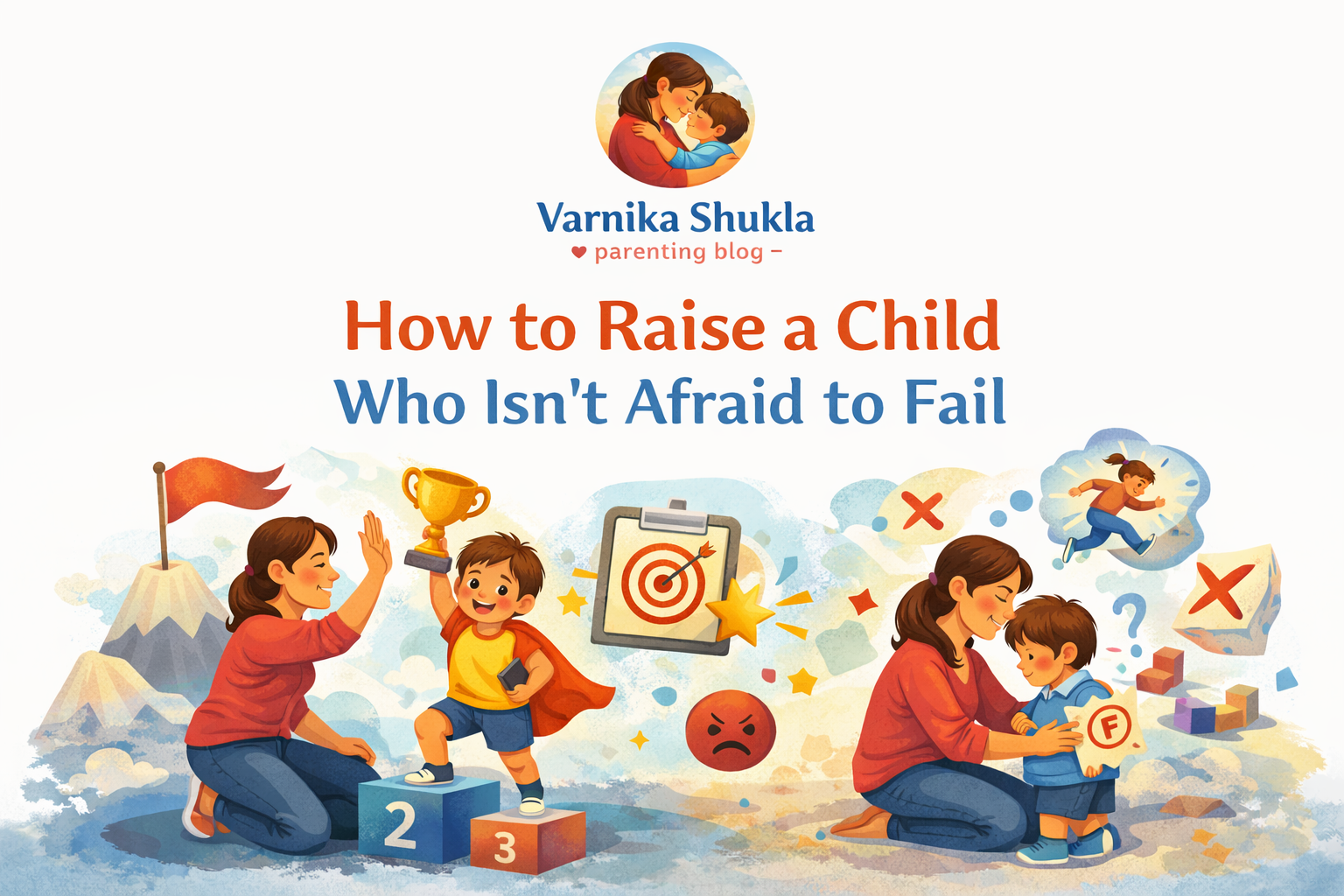
  • How to Raise a Child Who Isn’t Afraid to Fail

    How to Raise a Child Who Isn’t Afraid to Fail

    Fear of failure is one of the most limiting things a child can carry into adulthood. It shows up as perfectionism, procrastination, avoidance of challenges, and a fragile sense of self-worth. The good news is that the relationship a child has with failure is largely shaped by the environment they grow up in — and you have enormous influence over that environment.

    Praise Effort, Not Outcome

    Carol Dweck’s decades of research on mindset show that children who are praised for effort (“You worked really hard on that”) develop a healthier relationship with failure than children praised for ability (“You’re so smart”). When the praise is about effort, failure isn’t a verdict on who you are — it’s just information about what needs more work.

    Tell Your Own Failure Stories

    Parents who share their own struggles and failures — how they bombed a job interview, failed a class, or made a bad decision — normalize failure as a universal human experience rather than something shameful. These stories are gold. They tell your child that failure doesn’t end you, and that the people they admire most have failed too.

    Resist the Urge to Rescue

    When your child is struggling, failing, or about to make a mistake, every parenting instinct screams to intervene. But rescued kids don’t learn recovery. They learn that someone will always bail them out. Let appropriate failures happen — the low grade, the lost game, the fallen craft project — and focus your energy on how they respond, not whether it happened.

    Make ‘Mistakes’ a Normal Word

    How your family talks about mistakes matters. Homes where mistakes are met with disappointment, criticism, or punishment produce kids who hide errors and avoid risks. Homes where mistakes are met with curiosity (“What can we learn from this?”) produce kids who try harder things. Make “I made a mistake” a normal, uncharged phrase in your household.

    Celebrate the Try, Not Just the Win

    Acknowledge the courage it takes to try something new, enter a competition, audition for something, or raise your hand when you’re not sure of the answer. “I’m really proud of you for trying” — regardless of outcome — builds a child who associates bravery with reward, not just success.

    Set Challenges That Are Appropriately Hard

    Children need to experience what psychologists call “desirable difficulty” — challenges that are hard enough to require real effort but achievable enough that persistence pays off. Too easy and they don’t build grit; too hard and they give up. Find the sweet spot and stay in it as much as possible.